
Team

Professor Paul Komesaroff
Paul Komesaroff is Executive Director of Global Reconciliation. He is a physician, medical researcher and philosopher at Monash University in Melbourne, where he is Professor of Medicine. He is also a former President of Adult Medicine in the Royal Australasian College of Physicians. He is the Chair of the Editorial Board of the Journal of Bioethical Inquiry and Ethics Editor of the Internal Medicine Journal. He is the author of more than 500 articles in science, ethics and philosophy, and author or editor of sixteen books, including Experiments in love and death (2014), Continent aflame (2020), Pathways to reconciliation (2008), Objectivity, science and society (2009), and Troubled bodies (1996).

Dur-é Dara OAM
Dur-é Dara is renowned for her devotion to the ethics of food and service, in which she is a pioneer. She is the Convener of the Victorian Women’s Trust (since 1993), a Patron of the Victorian Foundation for the Survivors of Torture, and the Melbourne Vice President of Philanthropy Australia. She was awarded a Medal of the Order of Australia (1997) and a Centenary Medal (2001). She also received a Vida Goldstein Award, and was selected as one the 150 women in the Inaugural Women’s Honour Roll (2001). In the same year she was inducted as a Melbourne Food and Wine Festival Legend.

Michael Drapac
Michael Drapac is the founder of the Drapac Group, a property investment firm with a sustainability focus. The company was the first investment group to sign the United Nations Principles for Responsible Investment and has produced Australia's greenest building (EPA headquarters). He received a national sustainability award for creating Australia's most sustainable residential project.

David Krasnostein
David Krasnostein was former CEO of MLC Private Equity, Australia’s oldest and largest private equity investor. He was former Chief General Counsel of National Australia Bank, Telstra’s first General Counsel and Head of Strategic and Corporate Planning, and a Partner of Sidley Austin in Washington DC.

Moira Rayner
Moira is best known in Victoria as the last Commissioner for Equal Opportunity. She has also been the Acting Deputy Director (Research) of the Australian Institute of Family Studies; a Hearings Commissioner of the Human Rights and Equal Opportunity Commission. In 2000, she became the first Director of the Office of Children's Rights Commissioner for London, which modelled effective children's participation in government and is now an integral part of the Greater London Authority.
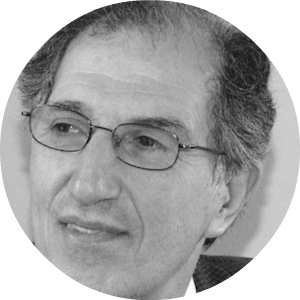
Dr Joe Talia
Joseph Talia studied opera in Milan and has performed in Rome, Milan, Vercelli, and elsewhere. He has been artistic director of Melbourne City Opera since 1996. He has been involved in over 140 opera productions, and has also taught many competition singers, including five Sun Aria Winners’. He was awarded the Order of Australia for his dedicated services to opera.

Emeritus Professor Paul James
Paul James is Research Director of Global Reconciliation. He is a publications editor of Arena and author of many books, including Globalism, Nationalism, Tribalism (Sage, 2006) and Global Crisis and Insecurity: The Human Condition, Darkly (Cambridge University Press, 2025). He has been an advisor to a number of agencies and governments including the Minister for Community Development, Papua New Guinea, the Helsinki Process, the Canadian Prime Minister’s G20 Forum, and the Commission on Reception, Truth and Reconciliation in East Timor.

Professor Alberto Gomes
Alberto Gomes is of Goan Indian heritage and spent his formative years in Malaysia, which instilled in him a strong appreciation for interculturalism. He is Director of Dialogue, Empathic Engagement and Peacebuilding (DEEP) Network and Emeritus Professor of anthropology at La Trobe University. He has also taught at University of Malaya (Malaysia), University of Helsinki (Finland), and Universitat Jaume I (Spain). Alberto's anthropological work and publications are focused on the Indigenous peoples of Malaysia, the Orang Asli, and from them he learnt to value peace, nonviolence, conflict transformation, empathy, equality, and ecological sustainability. Alberto is an ardent critic of structural violence and a strong advocate for peace.
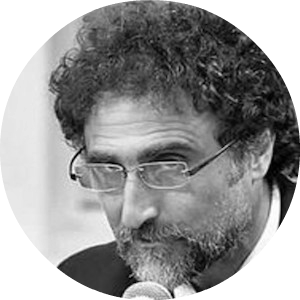
Dr Michalis Michael
Dr Michális S. Michael is former Director of the Centre for Dialogue and currently of the Melbourne node of Dialogue, Empathic Engagement & Peacebuilding (DEEP). He is author of a number of books including Civilizational Dialogue and World Order (2009), Negotiating History: Resolving the Cyprus Conflict (2009); and Reconciling Cultural and Political Identities in a Globalized World: Perspectives on Australia-Turkey Relations (2015).

Dr Selver Sahin
Selver Sahin is Assistant Professor of International Relations at Bilkent University, Ankara, Turkey and Associate of Global Reconciliation. She has a multi-disciplinary and multicultural background, with academic degrees in History, International Relations and Political Science. Selver's research is focussed on the forms of international intervention as a security and peace-building strategy. She carried out field studies in East Timor, Kosovo and Indonesia. She is also on the editorial board of the Journal of Near-Eastern and Balkan Studies.

Professor Suresh Sundram
Suresh Sundram is a consultant psychiatrist, researcher and Head of Adult Psychiatry at Monash Medical Centre and at the Monash University Department of Psychiatry. He has been involved for over a decade in asylum seeker and refugee mental health, and mental health service system development, and sits on the executive of the World Psychiatric Association section on developing countries. Suresh currently chairs the Health sub-committee of the Joint Advisory Committee for the Governments of Australia and Nauru on Nauruan regional processing.

Xenia Girdler
Xenia Girdler is a award-winning leader in design and implementation of student-centred, industry-led vocational programs in Melbourne and the Northern Territory. Xenia’s projects involved workforce development Certificates and Diploma’s in Tennant Creek, Alice Springs, Katherine, Alice Springs and the Remote Aboriginal Community Ngukurr in East Arnhem Land.

Dr Yusuf Sheik Omar
Yusuf is Research Associate at the School of Oriental and African Studies (SOAS) University of London, global speaker for reconciliation and organiser of many reconciliation training courses in Africa.
Professor Jeffrey D. Sachs (Columbia University, Former Special Advisor to the UN SecRetary General)
Professor Sachs has worked closely with the United Nations, serving as Special Adviser to successive Secretaries General, and is President of the UN Sustainable Development Solutions Network. Through these roles, he has promoted collaborative, multilateral approaches to addressing global challenges, including inequality, conflict, and environmental sustainability. His work consistently emphasises dialogue, shared responsibility, and practical cooperation across nations and cultures as essential foundations for peace and human flourishing. Jeffrey Sachs is a leading economist and global advocate for sustainable development and international cooperation. He is University Professor at Columbia University and has advised governments and international organisations worldwide on economic reform, poverty reduction, and development.

The Most Reverend Desmond Mpilo Tutu (Nobel Peace Prize, 1984)
The late Desmond Tutu is one of South Africa’s most well-known human rights activists, winning the 1984 Nobel Peace Prize for his efforts in resolving and ending apartheid. Born in 1931 in South Africa, he became the first black Anglican Archbishop of both Cape Town and Johannesburg. When South Africa’s first multiracial elections were held in 1994—electing Nelson Mandela as the nation’s first black president—Mandela appointed Tutu chairperson of the Truth & Reconciliation Commission (TRC). In addition to the Nobel Prize, Tutu has been bestowed numerous awards, including the the Albert Schweitzer Prize for Humanitarianism in 1986; the Pacem in Terris Award in 1987; the Sydney Peace Prize in 1999; the Gandhi Peace Prize in 2007; and the Presidential Medal of Freedom in 2009.

Aung San Suu Kyi (Nobel peace prize, 1991)
Daw Aung San Suu Kyi has been a major voice for human rights and freedom in Burma (Myanmar), a country dominated by a military government since 1962. Born in Rangoon and later educated at Oxford University, she became politically active in 1988 when the Burmese junta violently suppressed a mass uprising, killing thousands of civilians. In 1989 she was placed under house arrest. Suu Kyi remained in either in prison or under house arrest almost continuously since that time, until her release in November 2010. She remains a living expression of her people’s determination to gain political and economic freedoms. Suu Kyi has called on citizens around the world to “use your liberty to promote ours”.
Recent events in Myanmar have stimulated discussion as to the extent to which Daw Aung San Suu Kyi has been able to solidify a country-wide commitment to human rights. We are working to support the ideals which won her the Nobel Prize in 1991, including her lifetime support for the rule of law.
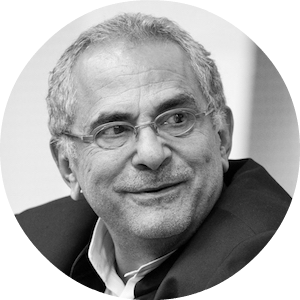
Dr José Ramos-Horta (Nobel Peace Prize, 1996)
José Ramos-Horta has spent most of his adult life fighting for freedom from oppression for his homeland. At the age of 18, Ramos-Horta was exiled from Timor-Leste for his outspoken criticism of government policies. Ramos-Horta spent over 25 years in exile, bringing the plight of Timor-Leste to the attention of the world. He convinced the United Nations to pass a resolution supporting the independence of Timor-Leste. In 2002, largely through Ramos-Horta's efforts, Timor-Leste was granted independence. In 2006, Ramos-Horta was elected as Timor-Leste's Prime Minister, and in 2007, as President.

Professor Bernard Lown (Nobel Peace Prize, 1985)
Bernard Lown (1921–2021)
Global Reconciliation notes with sadness the passing of Professor Bernard Lown, distinguished physician and Nobel Peace Prize laureate. Through his leadership in international medical cooperation and his work to prevent nuclear war, he exemplified a lifelong commitment to dialogue, peace, and reconciliation across political divides. Global Reconciliation gives thanks for his vision, humanity, and lasting contribution to the pursuit of peace.
Dr. Bernard Lown has long been an activist to abolish nuclear weapons and promote world peace. Dr Lown has founded or chaired a number of organisations dedicated to improving the health and wellbeing of people all over the world including: Physicians for Social Responsibility - educating millions of people on the medical consequences of nuclear war; the USA-China Physicians Friendship Association; the International Physicians for the Prevention of Nuclear War; SATELLIFE, a non-profitthat uses satellite technology to serve health information needs in developing countries, and; ProCor, an ongoing, global electronic conference that addresses the emerging epidemic of cardiovascular diseases in the developing world. Dr. Lown is the recipient of the UNESCO Peace Education Prize, the George F. Kennan Award, the Ghandi Peace Prize, and the first Cardinal Medeiros Peace Award, as well as 20 honorary degrees from leading universities both in the USA and abroad. In 1993, he delivered a most distinguished Indira Gandhi Memorial Lecture in New Delhi.
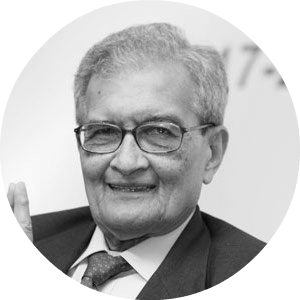
Professor Amartya Sen (Nobel Memorial Prize, Economics, 1998)
Born in India, Amartya Sen is an esteemed economist and philosopher, and is currently the Thomas W. Lamont University Professor, and Professor of Economics and Philosophy at Harvard University. With previous roles as Master of Trinity College, Cambridge, Professor of Economics at Jadavpur University Calcutta, the Delhi School of Economics, the London School of Economics, and Drummond Professor of Political Economy at Oxford University, Amartya Sen has also served as President of the Econometric Society, the American Economic Association, the Indian Economic Association, and the International Economic Association. He was previously Honorary President of OXFAM and is now Honorary Advisor. His research includes social choice theory, economic theory, ethics and political philosophy, welfare economics, theory of measurement, decision theory, development economics, public health, and gender studies. Amartya Sen’s books have been translated into more than thirty languages. Amartya Sen’s awards include Bharat Ratna (India); Commandeur de la Legion d’Honneur (France); the National Humanities Medal (USA); Ordem do Merito Cientifico (Brazil); HonoraryCompanion of Honour (UK); Aztec Eagle (Mexico); Edinburgh Medal (UK); the George Marshall Award (USA); the Eisenhauer Medal (USA); and the Nobel Prize in Economics.
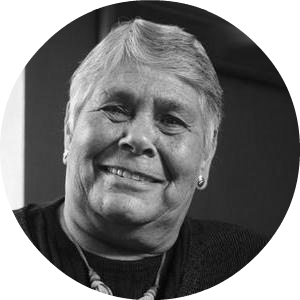
Professor Lowitja O'Donoghue (Australian of the Year 1984, CBE, AM)
Lowitja O'Donoghue (1932–2024)
Global Reconciliation mourns the passing of Professor Lowitja O’Donoghue, an extraordinary leader and advocate for Aboriginal and Torres Strait Islander peoples. A lifelong champion of justice, dignity, and reconciliation, she dedicated her work to building understanding between Indigenous and non-Indigenous Australians. Global Reconciliation expresses its deep gratitude for her wisdom, courage, and enduring commitment to reconciliation.
The late Lois (Lowitja) O’Donoghue is one of the most admired and influential Aboriginals in Australian history. Lois was born at Indulkana in the remote north-west of South Australia in 1932. Lois never knew her white father and at the age of two she was taken away from her mother for the next 33 years. After a long struggle, Lois became the first black nurse in South Australia. In 1976, Lois was the first Aboriginal woman to be awarded an Order of Australia Medal. In March 1990 Lois became the founding chairperson of the Aboriginal and Torres Strait Islander Commission. In 1993 she was a leading member of the Aboriginal team which negotiated with the Federal Government the agreement which provided the basis for the Native Title Act. She led the Australian delegation working on the proposed United Nations Declaration of Rights for Indigenous People and was the first and only Aboriginal person to address the UN General Assembly in 1993. Her formidable list of honors and achievements includes honorary doctorates from five universities.
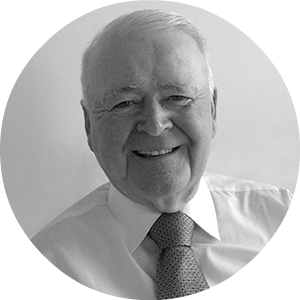
The Hon Sir William Deane (AC, KBE)
Sir William Deane was born in Melbourne in 1931, and was educated at Sydney University, where he graduated in Arts and Law. He studied international law and was awarded the Diploma (cum Laude) of The Hague Academy of International Law in 1955. After his return to Australia, he was appointed Queen’s Counsel in 1966, and in 1977 was appointed a judge of the Federal Court and the President of the Australian Trade Practices Tribunal. In 1982, then Prime Minister, Malcolm Fraser, appointed him a Justice of the High Court of Australia. In his 14 years on the High Court bench, Sir William favoured the rights of individuals over governments and sat in judgement over significant cases including the 1992 Mabo case. In November 1995 he was appointed Governor-General of Australia by then Prime Minister, Paul Keating. As Governor-General, Sir William made Australia’s disadvantaged his priority and he spoke out on his desire to see meaningful reconciliation between Aboriginal and non-Aboriginal Australians.
Sharing knowledge, experience and skills
Global Reconciliation has a network of highly skilled and in demand consultants available to share knowledge, experience and skills to build cultures of reconciliation around the globe. We work to build community resilience in the face of conflict, to build peace, and to create healthy dialogues to foster reconciliation. Our consultants work independently with clients from the non-profit, private and government sectors to provide specialist reconciliation and peace building consulting services to clients globally.
Reconciliaiton consultants are experts in policy development and community infrastructure and capacity-building in the fields of health, economics, anthropology, education, environment, justice, ethics and law.
Global Reconciliation consultants are skilled in the conduct of community consultations and dialogues in the fields of reconciliation, capacity-building, conflict resolution, and response to community need in settings of cultural, political or economic stress. Our geographic areas of familiarity and experience are extremely broad, covering more than 50 countries in all the major regions of the world.
They offer clients specialised services in the following areas:
► Facilitation of reconciliation dialogue
► Developing process pathways for reconciliation
► Design and facilitation of reconciliation training courses
► Capacity building for reconciliation
► Reviews of existing reconciliation strategies / approaches
► Development of reconciliation policy for communities, organisations and governments
Consultants may also offer development and implementation of detailed project plans, including full review of the literature, development of methodological strategies, data collection and analysis, and preparation of reports and publications.
x
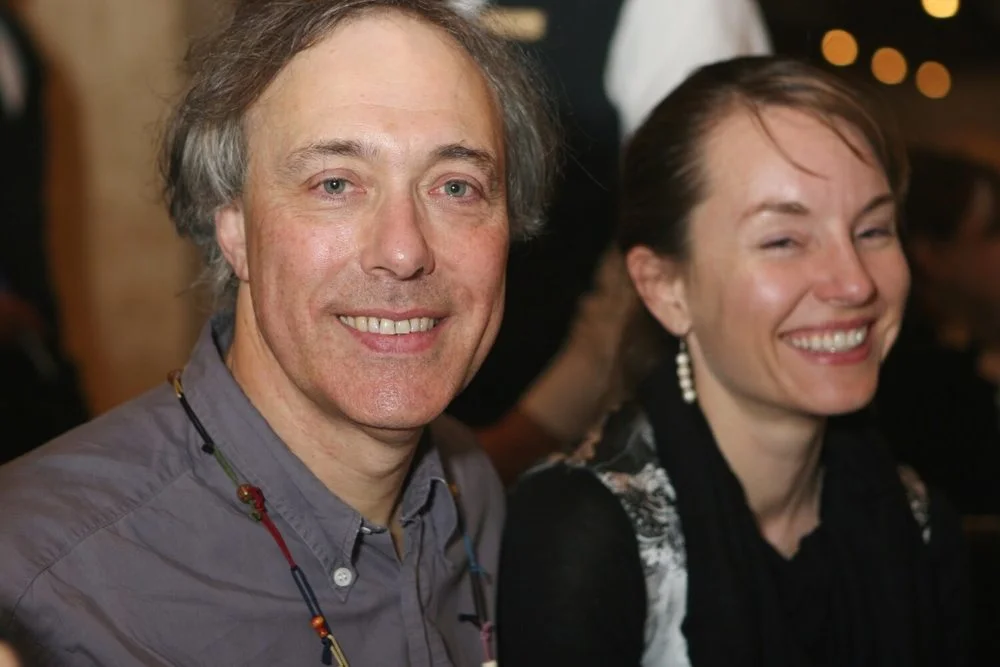
Professor Paul Komesaroff and Dr Elizabeth Kath at Pathways to Reconciliation Summit, Amman, Jordan (2009).